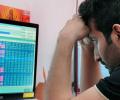
From the Sensex pack, Tata Consultancy Services and Infosys fell over 2 per cent each. Hindustan Unilever, Bharti Airtel, Sun Pharma, Power Grid, Bajaj Finserv, HCL Tech, Mahindra & Mahindra, and Tech Mahindra were also among the laggards. Among the gainers, Zomato jumped nearly 5 per cent. Larsen & Toubro, Axis Bank, ICICI Bank, IndusInd Bank and Kotak Mahindra Bank were also among the gainers.
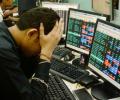
From the Sensex pack, Zomato, HDFC Bank, Tech Mahindra, Adani Ports, Tata Consultancy Services, ICICI Bank, Sun Pharma, Larsen & Toubro, HCL Tech and ITC were the major laggards. On the other hand, Tata Motors, Nestle, Titan, Hindustan Unilever and Reliance Industries were among the gainers.

Dabba Cartel's reluctant black comedy in the body of a crime thriller starts out interestingly enough to accomplish its Narcos: Thane aspirations, notes Sukanya Verma.

On Wednesday, August 21, 2024, 17 persons were killed and 33 hurt when a major fire and explosion ripped through a pharma unit at a company in Atchutapuram SEZ, Anakapalle, Visakhapatnam.

From the 30-share blue-chip pack, ITC Hotels, IndusInd Bank, Mahindra & Mahindra, Sun Pharma, UltraTech Cement and NTPC were among the biggest gainers. Titan, Kotak Mahindra Bank, Nestle, Asian Paints, HCL Tech and ICICI Bank were among the laggards.

While growth in India is largely domestic and hence the overall GDP effect may not be more than 0.15-0.2%, but overall trade will be impacted due to every country going back to the drawing board, points out Madan Sabnavis.

Sensex drops 138 points on foreign fund outflow

From 30 Sensex shares, Bajaj Finserv jumped nearly 8 per cent while Bajaj Finance soared over 6 per cent. Maruti, Titan, Mahindra, Mahindra & Mahindra, Infosys, HCL Tech, Zomato, UltraTech Cement and Kotak Mahindra Bank were the other major gainers. Sun Pharma emerged as the only laggard.
Drug major Sun Pharma is recalling over 34,000 bottles of a generic medication, used to treat high blood pressure, in the US market due to failed dissolution testing. As per the US Food and Drug Administration's Enforcement Report, the US-based arm of Sun Pharmaceutical Industries is recalling lots of Diltiazem Hydrochloride extended-release capsules which are used to treat angina, high blood pressure and some types of irregular heartbeats.
From the 30-share blue-chip pack, Adani Ports dropped over 4 per cent. UltraTech Cement, Sun Pharma, IndusInd Bank, NTPC and Tata Steel were also the among the laggards. Nestle, ICICI Bank, Infosys, Tata Consultancy Services and HCL Tech were among the gainers.

From the 30-share Sensex pack, Adani Ports surged nearly 6 per cent. NTPC, Axis Bank, State Bank of India, Larsen & Toubro, UltraTech Cement, Tata Motors, HDFC Bank and Reliance Industries were the other big gainers. Bharti Airtel, ITC, Sun Pharma, Asian Paints and Kotak Mahindra Bank were the laggards.
From the 30-share blue-chip pack, Tata Steel, NTPC, Kotak Mahindra Bank, IndusInd Bank, Power Grid, Zomato, Adani Ports, Asian Paints, Mahindra & Mahindra and Reliance Industries were among the biggest laggards. Titan and Sun Pharma were the only gainers.
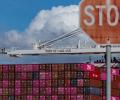
Goods from sectors, including agriculture, precious stones, chemicals, pharma, medical devices, electricals, and machinery may get impacted if the US will go ahead with imposing reciprocal tariffs on Indian products, according to experts. They said that these sectors could face additional customs duties from the Trump administration because of the high tariff differential or gap, which is the difference between the import duties imposed by the US and India on a product.

The pharmacy, identified by the federal anti-narcotics agency as JR Infinity Pvt Ltd, was located at Domalguda in Telangana's capital city.

The commerce ministry is working on different scenarios to assess the possible fallout of reciprocal tariffs to be imposed by the US administration on April 2 on its key trading partners including India, sources said. US President Donald Trump has said that April 2 will be 'Liberation Day' as he plans to announce tariffs or import duties to bring down America's trade deficit, and promote the country's manufacturing.
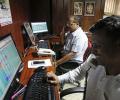
Bajaj Finance was the top gainer in the Sensex pack, rising around 2 per cent, followed by Sun Pharma, Tech Mahindra, Axis Bank, Bajaj Auto and Infosys. NSE Nifty rose 76.40 points to 15,174.80.
From the 30-share blue-chip pack, IndusInd Bank, NTPC, UltraTech Cement, Sun Pharma, Axis Bank, State Bank of India, Tata Steel, Power Grid, Adani Ports and Kotak Mahindra Bank were among the major laggards. Tata Consultancy Services jumped nearly 6 per cent after the IT services company reported an 11.95 per cent jump in the December quarter net profit to Rs 12,380 crore. Tech Mahindra, HCL Tech, Infosys and Bajaj Finserv were the other big gainers.
With a deployment of Rs 2,720 crore in July, MFs' total investment in HDFC Bank in calendar year 2024 (till now) surged to Rs 48,820 crore.
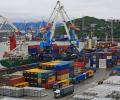
eclined for the third month in a row in January, falling by 2.38 per cent year-on-year to $36.43 billion, while the trade deficit widened to $22.99 billion in the month. Imports rose by 10.28 per cent year-on-year to $59.42 billion in January due to an increase gold shipments, according to the Commerce Ministry data. The trade deficit was $21.94 billion in December and $16.55 billion in January last year.

'My advice: Don't mark your portfolio to market every day. Focus on survival.'
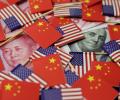
The trade war between the US and China is expected to benefit Indian exporters in increasing their shipments to the American market, sources said. They said the country was the fourth-largest gainer when the US imposed higher duties on Chinese goods during US President Donald Trump's first tenure.
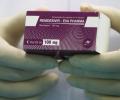
The Bharatiya Janata Party in Maharashtra objected to the pharma executive's grilling by Mumbai police, saying the Shiv Sena-led government in the state was playing politics amid the pandemic.

Mukesh Ambani, accompanied by younger son Anant and younger daughter-in-law Radhika Merchant Ambani, were among the many celebrities who attended Devendra Fadnavis' swearing in at Azad Maidan on Thursday afternoon.
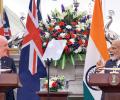
India and New Zealand have signed a pact to institutionalize their defence ties and vowed to boost cooperation in the Indo-Pacific. Prime Minister Narendra Modi raised concerns about anti-India activities by some illegal elements in New Zealand with his Kiwi counterpart Christopher Luxon. The two sides also signed six agreements to enhance cooperation in areas including education, sports, agriculture, and climate change. They also agreed to prepare a roadmap for cooperation in the defence industry sector and explore early implementation of cooperation in the digital payments sector.
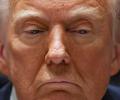
'As negotiations continue, the path forward demands not only diplomatic skill, but also vigilance against legal asymmetries embedded in America's trade playbook.'

Gland Pharma, promoted by China's Fosun, has extended its gains, is up 40 per cent since its listing.

From the 30-share blue-chip pack, Adani Ports, UltraTech Cement, Larsen & Toubro, Sun Pharma, HDFC Bank, ICICI Bank, NTPC and State Bank of India were the major laggards. Tata Consultancy Services, Reliance Industries, ITC, Asian Paints, HCL Tech and Maruti were among the gainers.

In contrast with their strong performance in 2020 and 2021, pharmaceutical and healthcare funds experienced a decline in 2022, with returns plummeting by an average 9.8 per cent. This trend has continued in the current year, with year-to-date return remaining in the negative (-4.9 per cent). In the past three months, pharma funds have been hit hard, experiencing a 7.9 per cent decline.
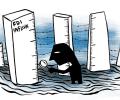
Foreign direct investment in India jumped 47.8 per cent to $16.17 billion in April-June this fiscal on healthy inflows in services, computer, telecom and pharma sectors, according to government data. FDI inflows were at $10.94 billion in April-June 2023-24. The data showed that overseas inflows in May rose to $5.85 billion and in June to $5.41 billion from $2.67 billion and $3.16 billion, respectively, in the year-ago period.

Fund managers said investors remained positive on the pharma manufacturing activity in India, which further strengthened during the Covid-19 period, on account of restrictions imposed on pharma imports from China.
Sun Pharmaceutical Industries on Tuesday said its arm DUSA Pharmaceuticals Inc has reached settlement with Biofrontera to resolve a litigation over misappropriation of trade secrets and unfair practice, following which DUSA will receive $22.5 million (nearly Rs 170 crore). In 2018, DUSA Pharmaceuticals had filed a suit at the US District Court of Massachusetts against Biofrontera Inc Biofrontera Bioscience GmbH, Biofrontera Pharma GmbH, and Biofrontera AG (together known as Biofrontera) alleging "misappropriation of trade secrets, tortious interference of contract and unfair trade practices".

Bengaluru dominated as the country's top city for job opportunities and salary growth as it has registered a 9.3 per cent year-on-year increase, closely followed by Chennai and Delhi, a report said on Thursday. This growth underlines Bengaluru's reputation as a technology and business hub as the average monthly unified salary in the city stood at Rs 29,500, making it the highest-paying city in the country, according to TeamLease Services Jobs and Salaries Primer report for FY24. The report is based on an analysis of unified salaries across temporary and permanent hiring markets.
Siemens's share price has lost ground in the past few sessions following weak management commentary. The management indicated challenges to the growth outlook due to stagnant private capex and concerns over semiconductor shortages for digital industries. Government infra-spending may regain momentum from January 2025.

In an affidavit filed in the top court, the SLA has given details of the steps taken by it against Patanjali and Divya Pharmacy.

Equity benchmark Sensex tumbled over 273 points on Tuesday, tracking losses in index majors Reliance Industries, Dr Reddy's and Axis Bank amid a massive selloff in Chinese markets. Despite opening on a positive note, the 30-share BSE index turned red to end 273.51 points or 0.52 per cent lower at 52,578.76, while the broader NSE Nifty fell 78 points or 0.49 per cent to 15,746.45. Dr Reddy's was the top loser in the Sensex pack, plunging over 10 per cent, after the company reported s 36 per cent decline in consolidated net profit at Rs 380.4 crore for the quarter ended June 30, 2021, on account of higher expenses.

The US health regulator has pulled up drug major Sun Pharma for manufacturing lapses, including failure to follow appropriate written procedures designed to prevent microbiological contamination of drug products, at its Gujarat-based plant. In a warning letter, the US Food and Drug Administration (USFDA) pointed out various lapses at the Halol plant which produces finished pharmaceutical products. "This warning letter summarises significant violations of Current Good Manufacturing Practice (CGMP) regulations for finished pharmaceuticals... Because your methods, facilities, or controls for manufacturing, processing, packing, or holding do not conform to CGMP, your drug products are adulterated," the USFDA stated.
From the 30-share Sensex pack, Adani Ports surged 6 per cent. NTPC, HDFC Bank, Bajaj Finance, Maruti and Axis Bank were among the other gainers. In contrast, Titan, State Bank of India, Asian Paints, Tata Consultancy Services, HCL Tech, Sun Pharma, IndusInd Bank and ICICI Bank were among the laggards.

Trump's tariff threats spooks markets; Sensex down 106 points

From the 30 Sensex pack, State Bank of India jumped 5 per cent, followed by ICICI Bank, Bajaj Finserv, NTPC, Adani Ports, Bajaj Finance and Larsen & Toubro. In contrast, Maruti, Tata Motors, Sun Pharma, Bharti Airtel, IndusInd Bank and Mahindra & Mahindra were among the laggards.

From the 30-share blue-chip pack, Zomato cracked nearly 7 per cent. Power Grid, Adani Ports, Tata Steel, NTPC, Tata Motors, Tech Mahindra, Mahindra & Mahindra, Asian Paints, Sun Pharma and UltraTech Cement were the other major laggards. In contrast, Axis Bank, Hindustan Unilever, Tata Consultancy Services and IndusInd Bank were the gainers.
